A study performed by the ) revealed an 83% fulfillment rate among timeshare owners. They are timeshare closing services happy with the purchase that gives them the discipline of better vacationing. The sales figures validate owner satisfaction with timeshare purchases. In 2016 the U.S. timeshare industry (products consisting of timeshare weeks, points, fractional and/or Personal Residence Clubs) celebrated its seventh consecutive year of growth.
In addition to the purchase price, purchasers of a fractional ownership residential or commercial property are required to pay fees. Shared by all owners, the costs cover residential or commercial property management, maintenance and repair work expenses, taxes, insurance, and housekeeping services. These additional costs can considerably contribute to the overall expense of the purchase. Timeshare owners must likewise pay maintenance costs.
Where fractional and traditional timeshares differ is the degree of owner control. While the fractional management business has responsibility for day-to-day operations, owners retain supreme authority and control over their residential or commercial property. Control of many timeshares remains with the project developer or hotel operator, who think about timeshare buyers as annual guests, not as homeowner.
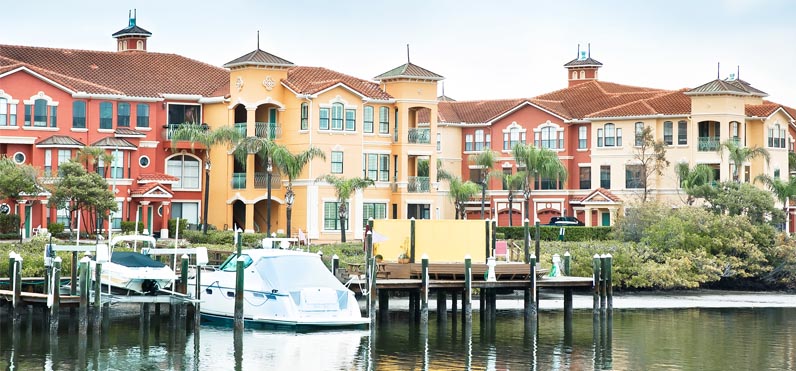
Another benefit of fractional ownership is the service offered by the management company. The staff can be familiar with owners. They can prepare the home according to owner choices, including personal touches such as putting up family pictures and concierge services like filling the refrigerator with food prior to arrival. Timeshares are usually limited to house here cleaning.
A crucial identifying characteristic between fractionals and standard timeshares is the variety of owners per home or apartment. Most timeshares are developed to have 52 owners per system (some have 26 owners). With numerous owners, stays are irregular and short, usually when annually for one week. As a result, there is little emotional connection in between the owners and the residential or commercial property.
The high traffic through the unit also indicates more wear and tear. By contrast, fractionals usually involve 5-12 owners per system, with owners visiting the residential or commercial property more often and remaining longer. With more significant ownership shares and more time spent at the residential or commercial property, fractional owners have a higher stake in how the property is kept and how it values in time.
All about How To Rent Your Timeshare
With less owners, fractional ownership properties go through less physical wear and tear. Interior of a Timbers Fractional Resort. how to get a free timeshare vacation. To acquire a timeshare, the minimum qualifying family income has to do with $75,000. The minimum income for fractional homes is approximately $150,000. For personal home clubs (a more luxurious fractional), minimum certifying household earnings is about $250,000.
Property types are different also, with timeshares typically one or two-bedroom systems while fractional tend to be bigger houses with 3 to 5 bedrooms. Many fractional residential or commercial properties have a much better place within a resort, exceptional building and construction, greater quality furnishings, components, and devices in addition to more facilities and services than a lot of timeshares.
High-quality building and finishes, more resources for maintenance and management, and less users add to the residential or commercial property's look and smooth operation. Fractional owners can usually exchange their getaway time to a brand-new location, easily and inexpensively, on websites such as. By contrast, many timeshare residential or commercial properties degrade over time, making them less desirable for original buyers and less valuable as a resale.
In the 1960s and 1970s timeshares in the United States acquired a bad reputation due to designer promises that might not be delivered and high-pressure sales methods that dissuaded many possible buyers. In action to buyer problems, state legislators passed stringent disclosure and other consumer-protection regulations. Also, the American Resort Development Association (ARDA), adopted a code of service principles for its members.
They legitimized timeshares by improving the quality of the timeshare purchasing experience offering it trustworthiness. Regardless of these http://codyvpvj004.jigsy.com/entries/general/a-biased-view-of-how-do-i-get-a-timeshare efforts, however, the timeshare has not completely lost its stigma. Fractional ownership, on the other hand, has actually established a reputation as a trusted financial investment. In the United States, fractional ownership started in the 1980s.
By 2000, national high-end hotel companies Ritz-Carleton and Four Seasons, along with others, began using residential or commercial properties, even more augmenting the image and worth of fractional ownership. During the same period, the fractional ownership principle extended to other industries. Jet and private yacht markets ran effective marketing projects convincing consumers of the advantages of purchasing super-luxury belongings with shared ownership.
The Buzz on How Much Does It Cost To Buy A Timeshare
The purchase of a timeshare unit is often compared to the purchase of a car. The car's value depreciates the moment it is driven off the showroom floor. Similarly, timeshares, start the depreciation procedure as quickly as they are acquired and do not hold their initial worth. Much of this loss is because of the significant marketing and sales costs incurred in selling a single domestic unit to 52 buyers.
When timeshare owners attempt to resell, the marketing and sales expenses do not translate on the open market into genuine estate value. In addition, the competition for timeshare buyers is intense. Sellers must not only compete with huge varieties of comparable timeshares on the market for resale however should contend for buyers taking a look at new items on the marketplace.
Data show that fractional ownership home resales rival sales of entire ownership holiday genuine estate in the exact same location. In some instances, fractional resale values have even surpassed those of entire ownership homes. 2-12 owners Typically 52 owners, 26 owners for some projects Fractional owners have a greater financial dedication and want to pay greater expenses 4-8 weeks depending on the variety of owners One week each year Fractionals have less wear and tear with less occupants Owners have a share of the title, based on the variety of owners.
Fractional ownership in a financial investment Owners have good control over property management Task developer or hotel operator keeps management control Fractional owners want to pay higher management expenditures Owners pay maintenance costs and taxes on the residential or commercial property Upkeep expenditures and taxes are paid in monthly costs Timeshare owners should expect regular monthly costs to increase every year Resale value tends to value Resale is challenging even at decreased prices Extreme competition for timeshare resales from other systems and new developments Owners decide Minimal service provided Personal residence clubs are a type of fractional with many facilities Greater quality and larger trip houses Usually one or two-bedroom units with basic quality Owners of fractionals have an incentive to preserve the home in excellent condition $150,000 annual income minutes.